Astronaut Ron McNair
From a segregated library in Lake City to the Space Shuttle, Ronald McNair’s life traced an extraordinary South Carolina path into science and space.
The Library
The small town of Lake City was like many others in South Carolina: an unassuming agricultural community with a railroad stop, crops of green beans, and an annual Tobacco Festival. In 1959, a precocious nine-year-old with a fascination for airplanes walked into the Lake City public library to check out books on science and calculus, and managed to cause a memorable ruckus in the process.
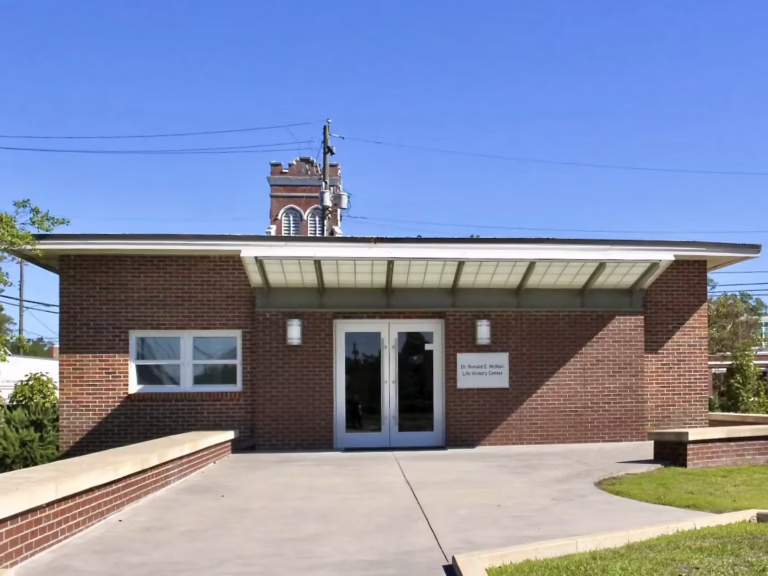
When Ron tried to get a library card, he was refused – the public libraries in South Carolina were segregated. “We don’t circulate books to Negroes,” he was told. Ron responded by parking himself on the counter and waiting. Police were called, along with his mother, Pearl. The officers eventually persuaded the librarian to let him take the books. Pearl then asked her son what he should say.
“Thank you, ma’am,” Ron said to the librarian.
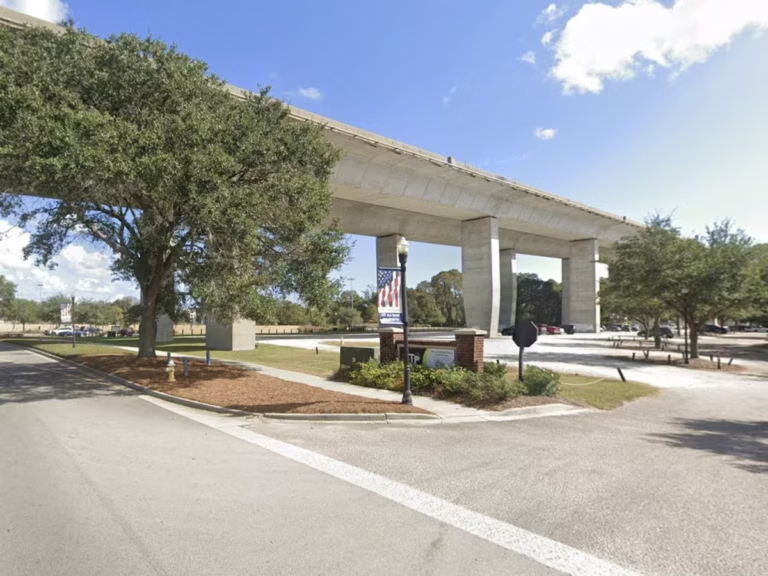
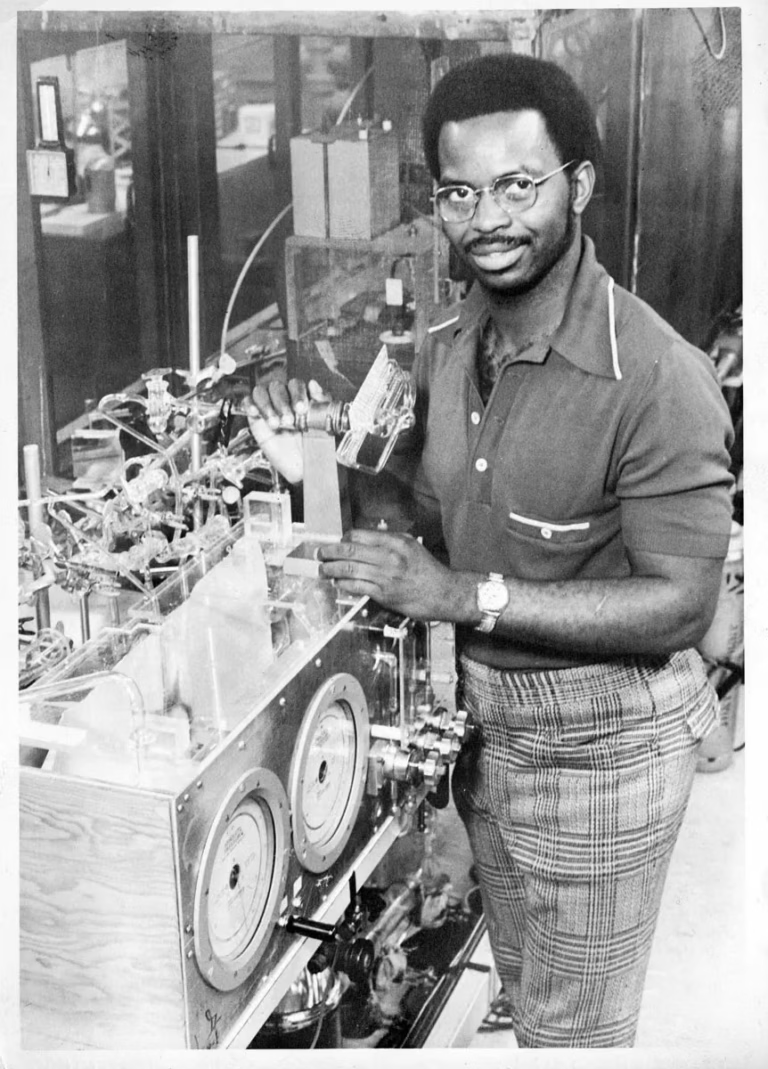
That same library building still stands in Lake City, though it now has a different name: the Ronald E. McNair Life History Center. The boy it once refused a library card went on to graduate as valedictorian in Lake City, magna cum laude from North Carolina A&T State University, and then earn a Ph.D. in physics from MIT, where his work in laser physics earned national recognition.
From Lake City to NASA
That episode at the library would be remarkable even if the rest of the story were ordinary. It was not.
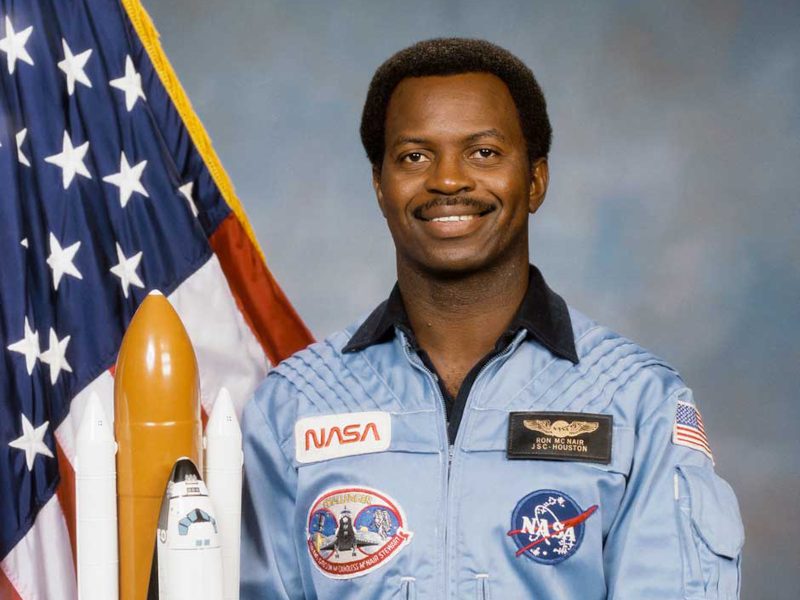
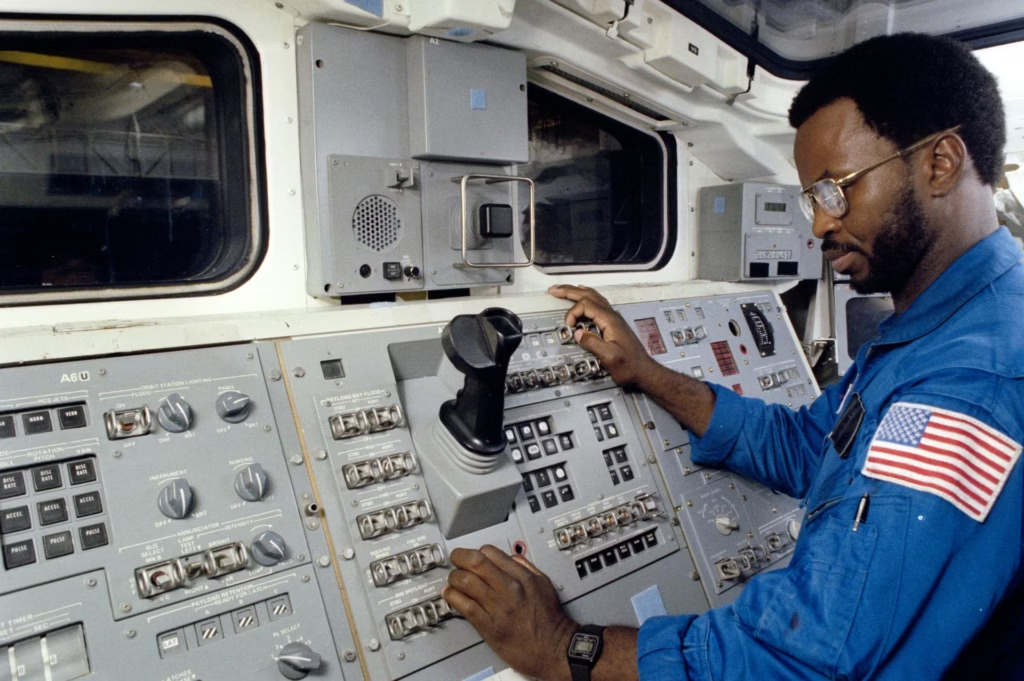
In 1978 NASA selected McNair for its astronaut corps, part of the first Space Shuttle-era class to include women and Black Americans. He flew aboard Challenger on STS-41B in February 1984, operating the shuttle’s Canadarm and conducting experiments in orbit. With that mission, McNair became the second Black American to travel in space.
His route there was not especially direct, at least by ordinary standards: Lake City, North Carolina A&T, MIT, laser physics, and finally NASA.
A Wider Door
Nichols considered leaving Star Trek during production in the 1960s, before Dr. Martin Luther King Jr. famously urged her to stay. He understood what Uhura represented on American television: a Black woman who was neither a maid nor a servant, but an officer on the bridge of the flagship.
Nichols later worked with NASA in the 1970s to recruit women and minorities for the new Space Shuttle program. The 1978 astronaut class included McNair, Guion Bluford, Frederick Gregory, Sally Ride, Judith Resnik, and others who permanently changed the face of the American astronaut corps.
The useful connection is not that Star Trek can be neatly credited with putting McNair in space. It is that one of its actors helped NASA broaden who it invited to apply.

Challenger
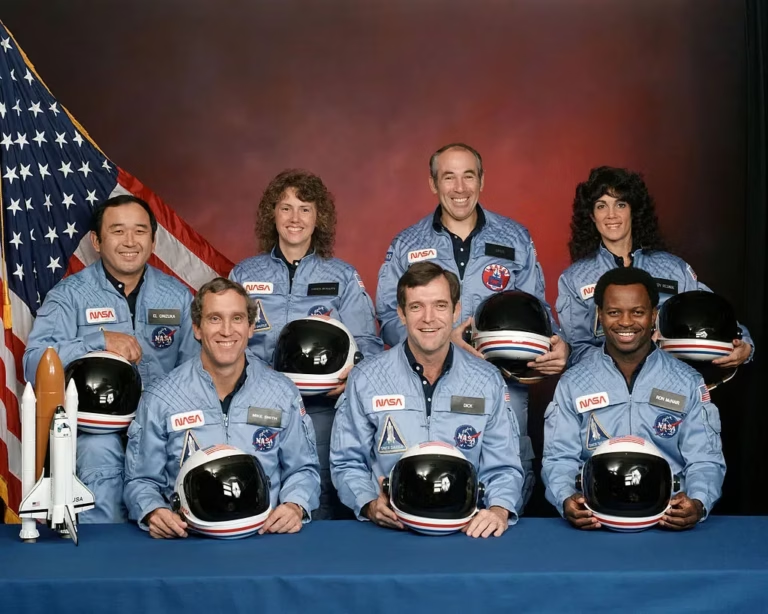
McNair launched on his second shuttle flight on January 28, 1986. Seventy-three seconds after liftoff, Challenger broke apart, killing all seven crew members.
Dr. Ron McNair was 35. The Challenger disaster has sometimes overwhelmed the rest of his biography, but his first flight, research career, teaching, and public work all came before it and deserve to be remembered on their own terms.

South Carolina
Between his two shuttle assignments, McNair returned to South Carolina in 1984 to deliver a commencement address at the University of South Carolina — my alma mater. The recording is worth hearing on its own, without any motivational memes stapled to it:
McNair’s name now appears on schools, research programs, and the federal Ronald E. McNair Postbaccalaureate Achievement Program. In Lake City, that public library became the Ronald E. McNair Life History Center; at USC, the McNAIR Center for Aerospace Innovation and Research carries his name into the same field that defined his career.
His life makes a point, doesn’t it? A child once refused a library card in Lake City became an MIT physicist and an astronaut – the overwhelming distance between those two facts is more than enough.