The Charleston Single House
A Charleston Single can look simple from the sidewalk: a narrow façade, a side porch, a handsome old door that may or may not lead where a normal person expects.
The deeper story is more useful. The form reveals how Charleston used long lots, shade, breezes, privacy, rear buildings, and architectural fashion to make a house that could adapt for centuries without losing its identity.

Anatomy of a Charleston Single
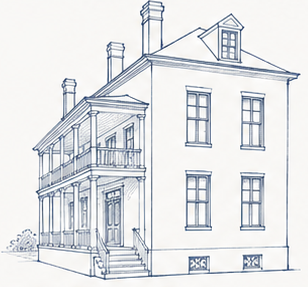
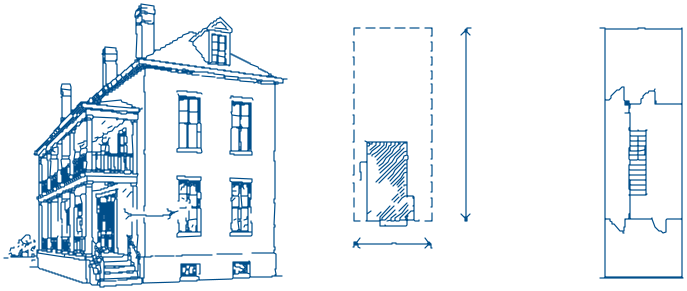
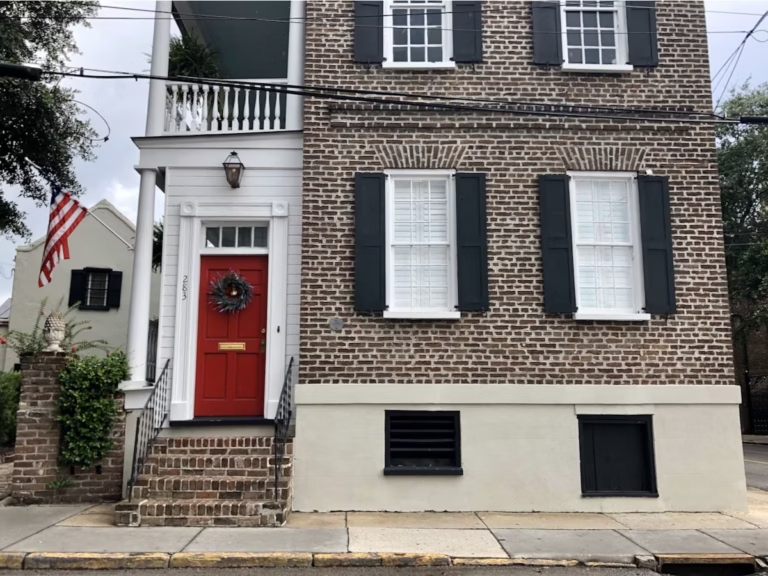
A Charleston Single House is a narrow, one-room-wide house whose short end faces the street, while its main rooms and side piazza extend deep into the lot.
The sidewalk view can be misleading. The door facing the street may open onto the piazza rather than directly into the house. The true interior entrance may be farther along the side.
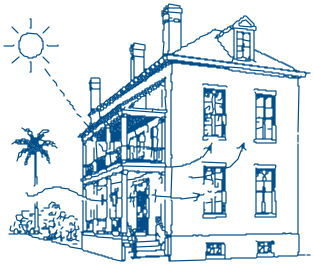
That odd sequence is not a defect in the design. It is the design. The house turns into the lot because the lot is narrow, the climate is hot, and the piazza acts as outdoor room, circulation spine, shade device, and social filter.
Recognition cues
- Narrow street frontage: the short end of the house faces the street.
- Long side elevation: principal rooms extend into the lot.
- Side piazza: covered galleries usually run along the long elevation.
- Central hall and stair: principal rooms commonly sit on either side.
- Rear dependency: larger properties may include kitchen houses, storage, workrooms, or quarters.
Singles on the Market
Current Charleston Single homes


Origins
Influence, not a single invention
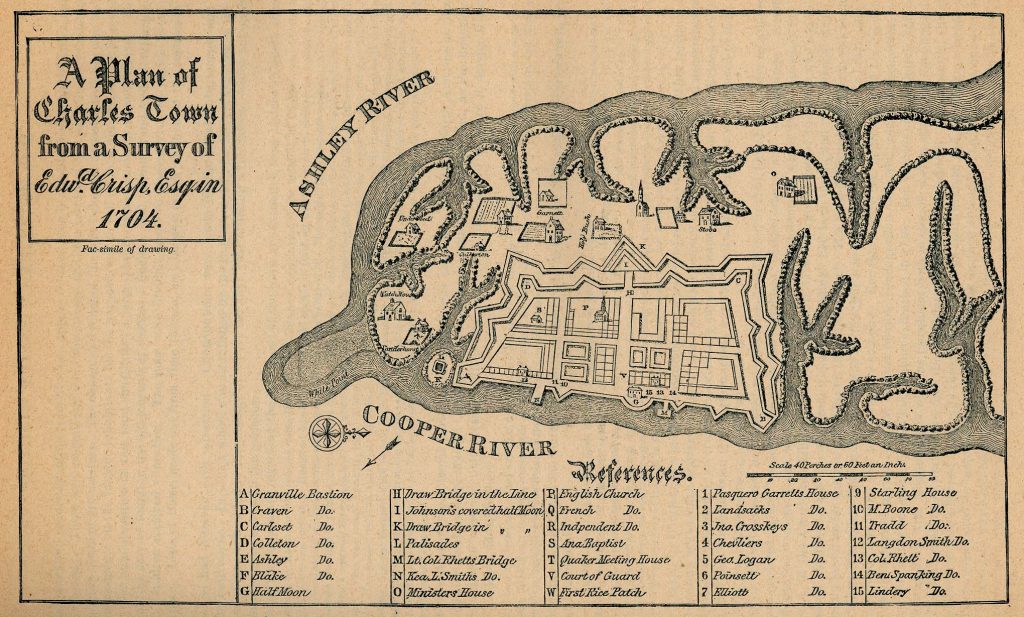
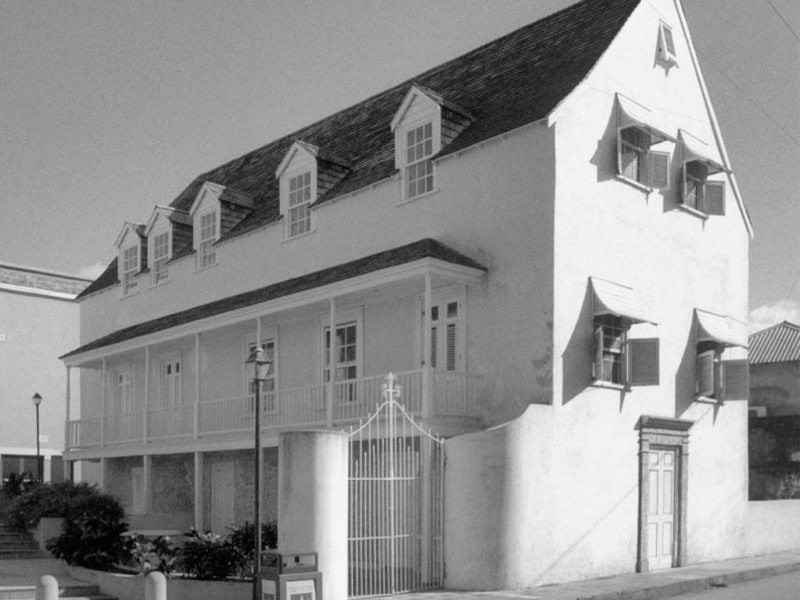
The Charleston Single did not arrive as a finished object. Barbados, Britain, and the Carolina colony exchanged people, capital, building practices, and labor systems across the Atlantic.
That exchange supplied precedents, but Charleston’s deep lots, hot climate, dense streets, fire risk, and domestic compounds transformed the form locally. The safer argument is influence and adaptation, not a clean origin story.
The lot
The climate
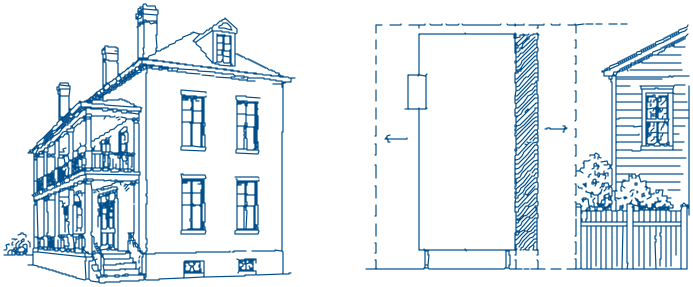
Fire and privacy
Form & Function
Layout & Design
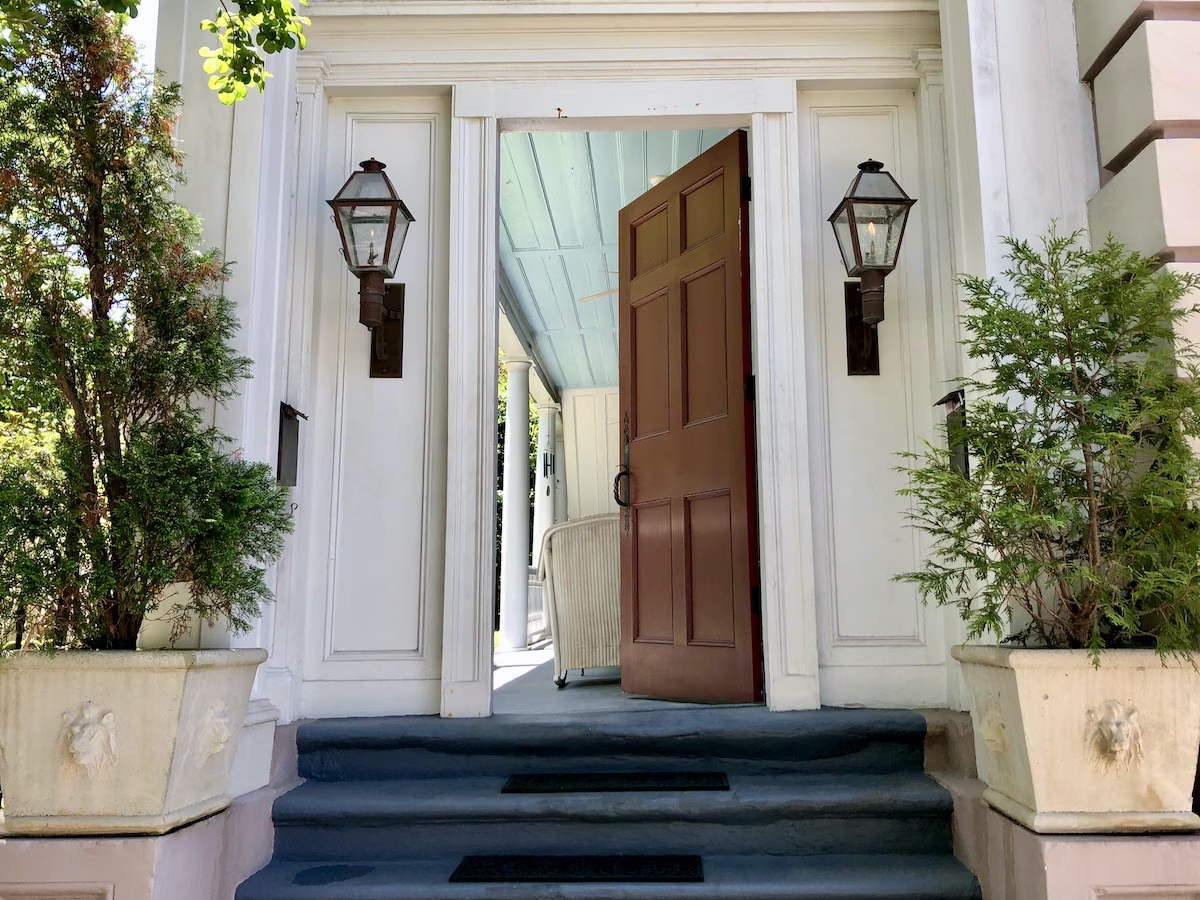
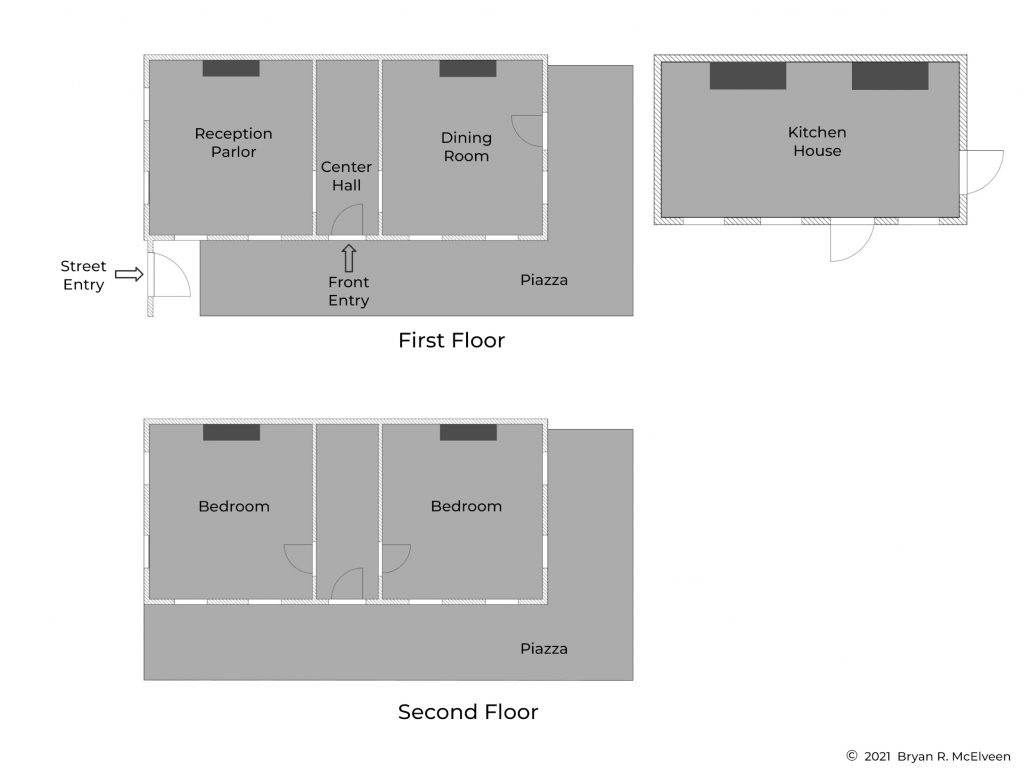
The plan is not interesting because it is odd. It is interesting because it organizes a narrow house into a sequence that still shapes daily life: the street door, the piazza, the interior entry, the hall, the formal rooms, the stair, and the bedrooms above.
In many examples, the front parlor sits near the street, more private rooms extend deeper into the house, and bedrooms occupy the upper floor. The result is a house that can feel formal from the sidewalk but surprisingly layered once you are inside the gate.
The Piazza
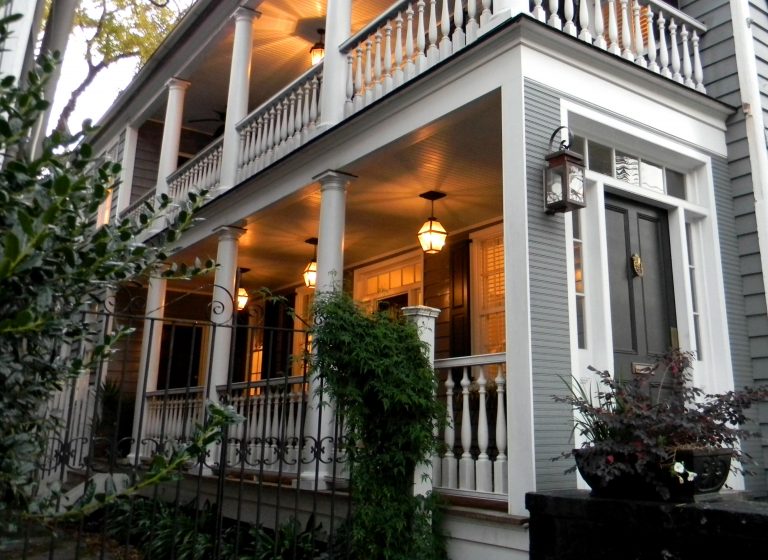
The piazza is the clearest differentiator of the Charleston Single: a full-length porch spanning the long side of the home. It shades the long wall, creates an outdoor room, stages arrival, moves people along the side of the house, and changes how light and air reach the interior.
It is also one of the first places a buyer should slow down. A standard open piazza, partially enclosed piazza, and fully enclosed piazza can each change how the house lives — and how it reads during inspections, preservation review, and future resale.
Open
Partially Enclosed
Fully Enclosed
The Hyphen & Dependencies
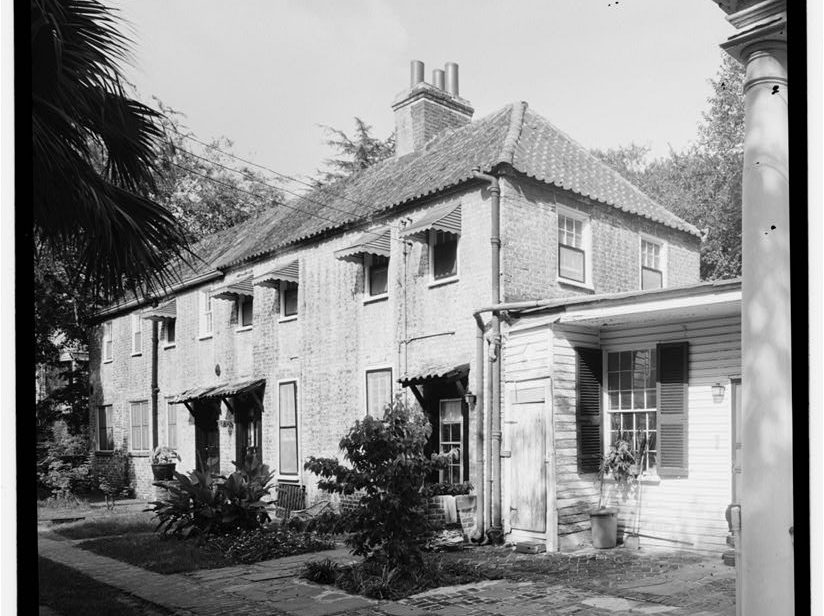
Many larger historic properties included rear buildings for kitchens, storage, workrooms, laundries, stables, or quarters. Later owners often connected those structures to the main house with a hyphen or absorbed them into modern living space.
Handled well, a dependency can become a guest suite, office, kitchen, or private courtyard anchor. Handled badly, it creates roof intersections, dark transitions, drainage problems, and a floor plan only a contractor could love.
Detached
Connected by Hyphen
Absorbed
Architectural Eras
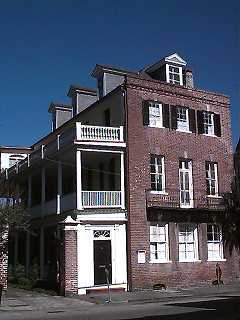
Early Charleston Single
In the earliest period, the Charleston Single emerged from Atlantic precedent, local lot patterns, climate, materials, and practical urban pressures. Ornament tends to be restrained; survival and documentation matter more than tidy labels.
Current examples: Before 1820


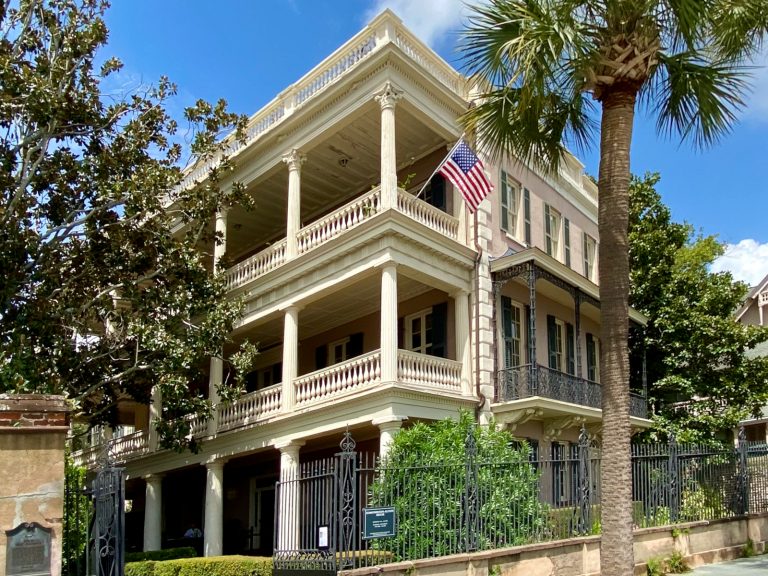
Mature Charleston Single
By the antebellum period, the form had become more formal and more expressive. Greek Revival taste, larger domestic compounds, wealth, social hierarchy, and more elaborate piazzas shaped how the house presented itself and how the property worked.
Current examples: 1821–1865


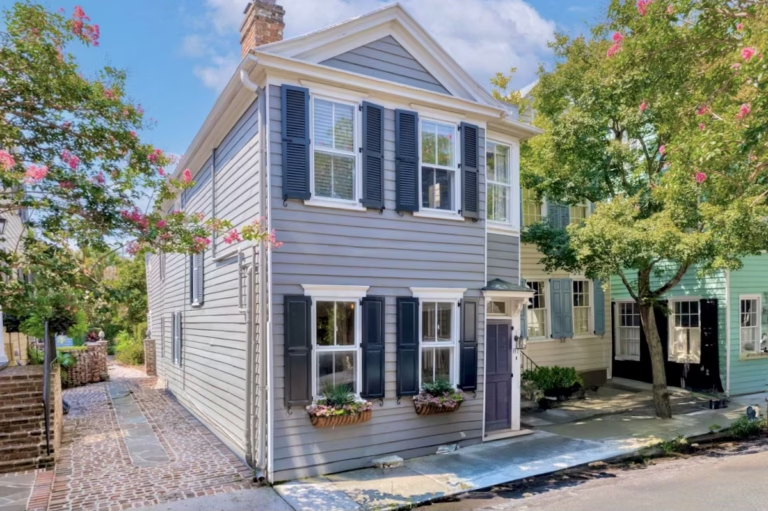
Adapted Charleston Single
After the Civil War, the form adapted to economic change, Italianate and Victorian fashion, new utilities, rental pressure, apartment conversions, and changing expectations for household life. Some examples preserved the plan clearly; others carry several generations of compromise.
Current examples: 1866–1940


Household Life
Arrival and formal rooms
The piazza created a controlled arrival. A visitor might enter through the street door, move along the covered gallery, and only then reach the interior entrance. Formal rooms near the front received guests, while bedrooms, yards, and rear buildings sat farther from public view.
Work and service spaces
The rear of the property carried much of the work: kitchens, laundries, storage rooms, workshops, stables, and quarters. On many properties, enslaved domestic workers moved constantly between dependency, yard, piazza, and main house, even as the architecture pushed that labor away from the public face of the residence.
The Charleston Single should not be described too neatly as an “in-town plantation.” Urban households and rural plantations were different places with different economies. But both were shaped by slavery, and many wealthy Charleston families drew income from plantation agriculture, Atlantic commerce, or both.
Modern Life
Reworking the Rear
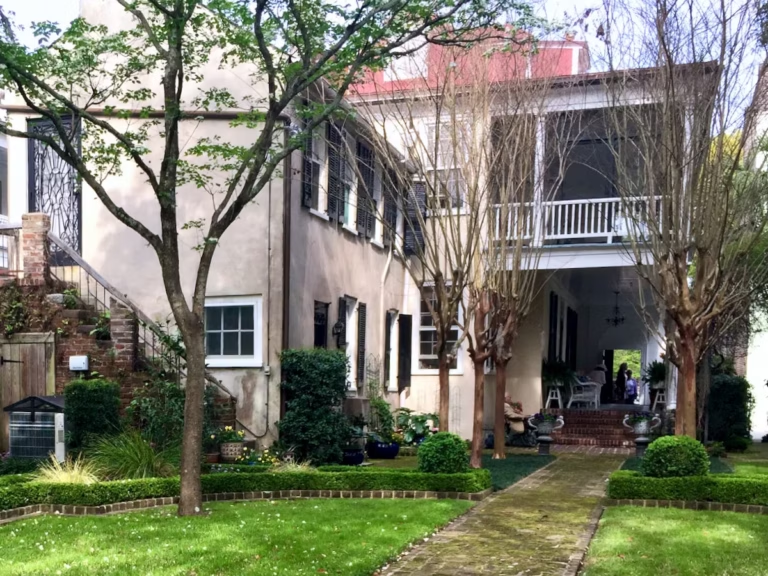
The rear of a Charleston Single is often where the largest modern transformation occurs. A narrow hyphen, an old kitchen house, or a series of smaller additions may be combined into one larger kitchen, dining, and informal living area with a stronger connection to the courtyard or garden.
The same footprint is often extended upstairs to create a larger primary bedroom, dressing area, and modern bath. Done well, the rear carries the demands of contemporary life while the original front rooms, center hall, and stair sequence remain legible. Done poorly, it creates dark transitions, complicated rooflines, and a new house awkwardly attached to an old one.
Repurposing Dependencies
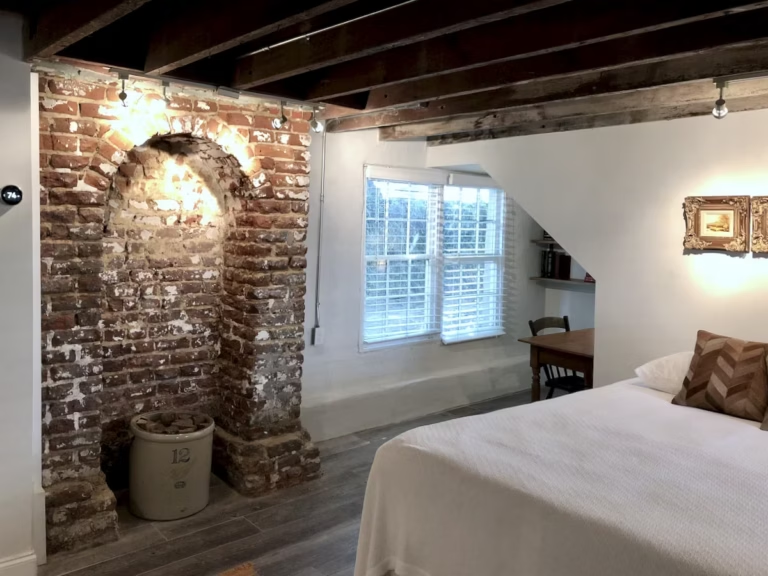
A surviving dependency can become one of the most useful parts of the property. Former kitchens, workshops, carriage buildings, and service structures may be renovated as a substantial home office, studio, workshop, arts room, guest suite, or standalone apartment.
The possibilities depend on the building, its recorded use, access, utilities, zoning, and preservation constraints. Some dependencies can accommodate long-term renters or guests with considerable privacy. In less common situations, a legally eligible outbuilding may qualify for short-term rental use, but that should never be assumed from the listing description or the presence of a second kitchen.
For the regulatory side, see the Charleston Short-Term Rental Guide.
Enclosing the Piazza
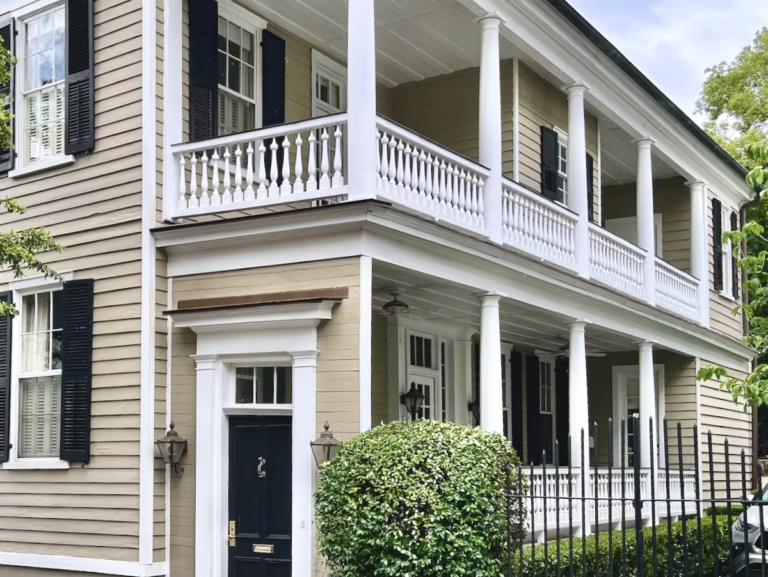
Enclosing part or all of a piazza can add conditioned space where the original house has little room to spare. The result may become a sitting room, breakfast area, office, bath, closet, or expanded bedroom.
The tradeoff is that the piazza was doing more than providing spare square footage. Enclosure can reduce daylight, interrupt ventilation, obscure the original entry sequence, and make interior rooms feel farther removed from the outdoors. Partial enclosures are often more successful because they gain useful space while preserving some of the piazza’s architectural and practical role.
Modern Systems in an Old Shell
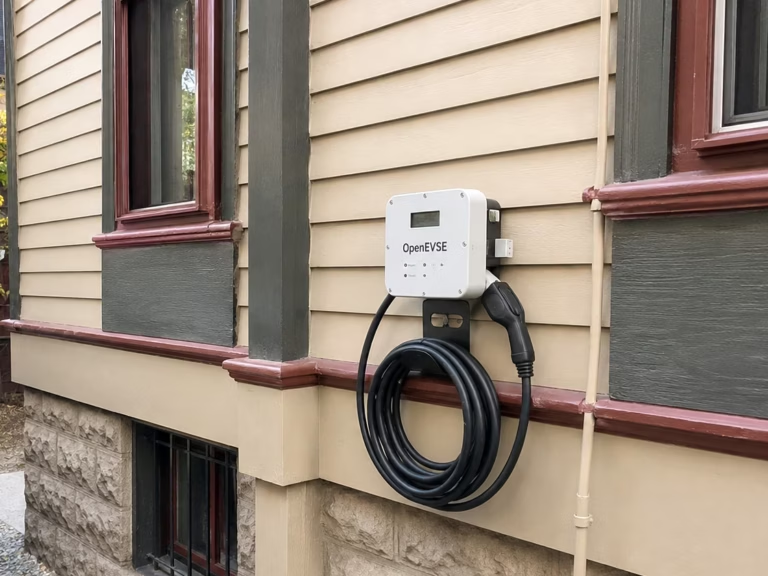
Charleston Singles were not designed around central air, modern electrical service, large plumbing runs, insulation, data wiring, or current flood-resilience standards. Adding those systems without damaging the house’s proportions or historic fabric requires more than finding somewhere to hide the equipment.
Mechanical chases, ductwork, electrical panels, plumbing stacks, drainage improvements, crawlspace work, and flood-related upgrades all compete for limited space. The best renovations integrate them quietly and preserve access for future maintenance. The less successful ones solve today’s problem by placing tomorrow’s repair behind three layers of finished carpentry.
Due Diligence
Building and Structure
- Piazza framing, columns, decking, and roof intersections
- Foundation, crawlspace, visible settlement, and moisture patterns
- Masonry, chimneys, windows, shutters, siding, and roof condition
- Termites, rot, plumbing, electrical, HVAC, and awkward additions
Deed, Ownership, and Use
- Deed history, plats, parcel boundaries, and easements
- Legal use of dependencies, accessory structures, and rear buildings
- Recorded square footage, apartment conversions, and prior ownership changes
- Permits, BAR history, title exceptions, and documented exterior alterations
Water, Drainage, and Insurance
- FEMA flood zone, elevation certificate, and flood insurance quote
- Stormwater behavior on the block and site grading around the house
- Roof, gutter, piazza, courtyard, and crawlspace drainage
- Prior water intrusion where known, wind insurance, and property insurance expectations
Daily Ownership
- Parking, deliveries, access, stairs, storage, and furniture placement
- Outdoor maintenance: piazzas, railings, shutters, roofs, courtyards, and dependencies
- Preservation constraints, likely specialist needs, and annual maintenance rhythm
- Whether the total ownership profile fits the buyer, not just the romance of the house