Property Taxes in South Carolina
Property taxes are one of the most important ownership costs to understand before buying a home in South Carolina. They are also one of the easiest numbers to misunderstand during an online home search.
The hardest part isn’t the calculation – it’s knowing which numbers actually matter. The property tax shown on an online listing is usually one of the least useful.
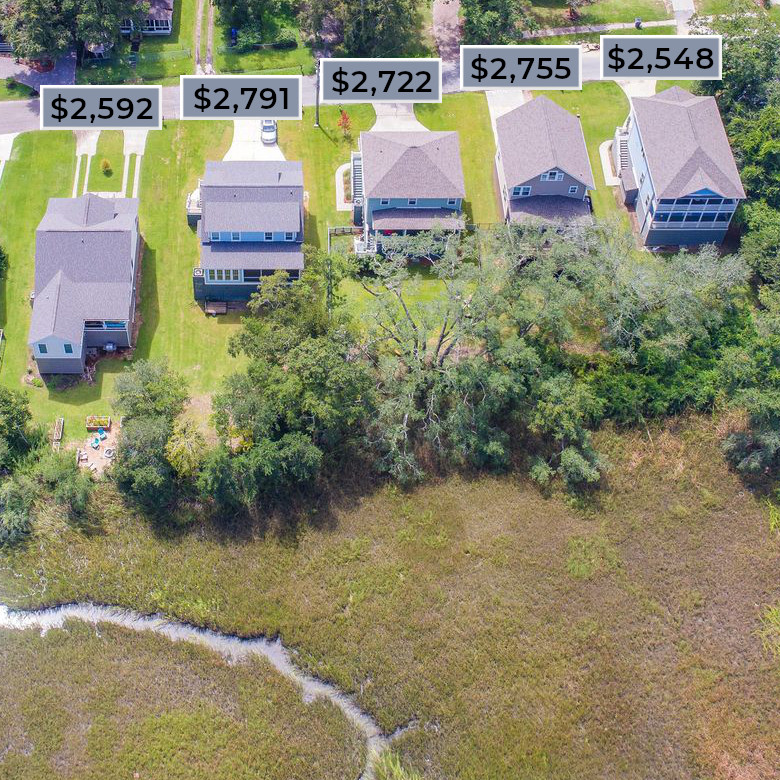
The property tax shown on a property listing is usually the current owner’s tax bill – not yours.
That number may reflect a different purchase price, years of reassessments, and even a different legal classification. Two identical homes can display very different tax bills while producing nearly the same bill for a new buyer.
Compare homes using estimated future taxes – not the seller’s historical bill in the MLS listing.
The Big Picture
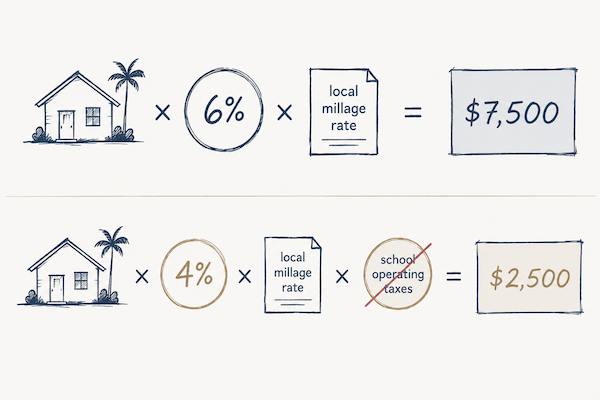
South Carolina property taxes begin with a fairly simple default. Most real property is assessed at 6% of its appraised value, after which the applicable local millage rate is applied.
This is why the published tax bill on an existing listing tells you almost nothing about what your first tax bill will be.
That default classification covers second homes, rental properties, vacation homes, vacant land, commercial real estate, boat slips, and other real property that has not been approved as the owner’s legal residence.
The same broad framework also applies to other taxable property, including automobiles and boats, although those categories have their own valuation rules.
For a buyer who will own and occupy the home as a legal primary residence, the calculation changes in two important ways.
First, the assessment ratio may be reduced from 6% to 4%. More significantly, an approved legal residence also receives relief from school operating taxes.
That second benefit is often misunderstood. It is not a single statewide discount. The amount depends on the school-operating millage and other details attached to the property’s individual tax district. As a result, the final bill can be far lower than a simple 6%-to-4% adjustment would suggest.
The property does not receive this treatment automatically. The owner must apply through the county and establish that the home is the owner’s legal residence.
If the property is anywhere near a 1099 form, rental ledger, or depreciation schedule, begin your calculations with the 6% rate unless the county confirms otherwise.
Primary Residence
Everything Else
Worked Example
Assume a home is purchased for $500,000.
Under the default 6% classification, a first full-year tax estimate might be around $7,500.
If the property qualifies as the owner’s legal residence, the bill might be closer to $2,500 because both the 4% ratio and school-operating-tax relief apply.
The exact result depends on local millage, tax district, credits, exemptions, and fees. The example is directional, not a substitute for the county’s calculation.
What matters: classification changes the estimate before the local numbers are applied.
The Calculation
Once classification is understood, the remaining calculation is fairly direct.
What matters: A useful estimate starts with your purchase price and intended use – not last year’s tax bill.
Appraised Value
For many purchases, the county’s appraised value begins close to the purchase price. Future reassessments occur under South Carolina law and are subject to limits, but buyers should generally assume that today’s purchase price – not the seller’s purchase price – is the most useful starting point.
Assessment Ratio
The assessment ratio converts appraised value into taxable value. This is the first place owner occupancy changes the calculation. The larger practical benefit may come from the school-operating-tax relief described above.
Millage Rate
Millage rates are established locally by counties, municipalities, school districts, and other taxing authorities. They vary across the Charleston region, which is why two similar homes can produce different tax bills.
A quick estimate can often be made using current county millage, but published county tables remain the authoritative source.
Homestead Exemption
South Carolina’s Homestead Exemption is separate from the 4% legal residence classification. Qualifying homeowners may receive an additional exemption after applying through their county.
Estimating Taxes
Nearly every MLS listing includes a property tax figure. Unfortunately, that number is one of the most misunderstood fields in residential real estate.
It is usually the current owner’s most recent tax bill – not an estimate for yours.
The amount may reflect:
- a purchase made many years ago
- the owner’s legal residence status
- prior reassessments
- exemptions that won’t transfer
- credits unique to that owner
None of those necessarily apply to the next buyer, who may be purchasing at a very different price, using the property differently, or qualifying for relief the seller did not receive.
A useful estimate therefore begins with the buyer’s likely purchase price and intended use – not the seller’s last tax bill.
Start With the Likely Purchase Price
Use the price you expect to pay, not the seller’s original purchase price.
Determine the Classification
Primary residence, second home, rental, investment property, or another use.
Confirm the Tax District
County, municipality, school district, and special districts can all affect millage.
Apply Likely Relief
Legal residence, Homestead Exemption, and other credits must be treated separately.
This Is the Kind of Number I Check Before a Client Relies on It
Property taxes are only one part of the ownership cost that can change after closing. I help buyers compare homes using the assumptions that are likely to apply to them – not merely the figures inherited from the current listing.
That includes property taxes, insurance, flood considerations, HOA obligations, and the practical costs attached to a particular location.
Frequently Asked Questions
Why is the property tax shown on a listing different from what I may pay?
The figure shown on a listing usually reflects the current owner’s most recent tax bill. It may be based on an older purchase price, a different property classification, or exemptions that may not apply to the next owner. It is useful history, but it is not automatically a reliable estimate of your future bill.
Think of it as a historical accounting record – not a prediction.
What is the difference between the 4% and 6% assessment ratios?
A qualified legal primary residence is generally assessed at 4% of appraised value. Second homes, rental properties, investment property, and most other real estate are generally assessed at 6%. Primary residences may also receive relief from school operating taxes.
Does a home automatically receive the 4% legal residence rate?
No. The owner generally must apply through the county and demonstrate that the property is the owner’s legal primary residence. Until the application is approved, the county may continue taxing the property under a different classification.
How does buying a home affect the property’s appraised value?
After an arm’s-length sale, the county commonly uses the new purchase price as the basis for the property’s appraised value. That is why the current owner’s tax bill may not be a useful forecast for the buyer’s first full tax year.
Do Charleston, Berkeley, and Dorchester counties calculate taxes differently?
They use the same state assessment framework, but local millage, municipal boundaries, school districts, special districts, credits, and fees can differ. The correct county and tax district matter when producing an estimate.
What is the South Carolina Homestead Exemption?
It is a separate exemption for qualifying homeowners who are generally age 65 or older, totally and permanently disabled, or legally blind. For eligible legal residences, it exempts the first $50,000 of fair market value from property taxes. A county application is required.
Can property taxes be estimated before making an offer?
Yes. A useful estimate should begin with the likely purchase price, intended property use, correct county and tax district, and any expected exemptions. The result is still an estimate, but it is far more useful than simply carrying forward the current owner’s bill.
Buying a Home Is Easier When the Numbers Make Sense
Property taxes are only one part of the cost of owning a home. My role is helping buyers understand those costs before they become surprises, using the assumptions that are likely to apply after closing—not simply the figures inherited from the current listing.