Should You Buy a Home for a College of Charleston Student?
A student-housing decision begins as a question about where someone will sleep. Buying turns it into a second question: whether the family also wants to own, finance, maintain, regulate, and eventually dispose of a Charleston property.
That can be a sensible plan. It can also be an expensive way to learn that roommate rent is revenue, not magic.

The Decision
For most families, renting is the simpler and more flexible answer. Buying becomes worth investigating when the family has adequate cash and reserves, expects a useful holding period, can manage the property, and would still want the asset after the student leaves.
Roommate income can reduce carrying costs. It does not erase property taxes, insurance, repairs, vacancy, management, transaction costs, or the occasional mysterious encounter between a bicycle and an interior wall.
Would this still be a property you wanted to own if the student changed plans next semester?
If not, the purchase is relying too heavily on one person’s four-year calendar.
Three Paths
These are not three levels on a ladder. Each solves a different problem: campus housing minimizes management, renting preserves flexibility, and buying trades simplicity for control and a longer ownership horizon.
Live on campus
- Best fit
- Simplicity and campus support
- What it adds
- Property decisions
Campus housing keeps the student close to classes and College support while removing most property and landlord decisions from the family.
For Fall 2026, incoming first-year students who complete the College housing application by 11:59 p.m. Eastern on May 1 are guaranteed on-campus housing.
Rent off campus
- Best fit
- Independence with flexibility
- What it adds
- Equity and control
An off-campus lease offers greater independence without tying the family to a property, a mortgage, or an exit strategy.
Compare the lease term, guarantor requirements, utilities, parking, bedroom configuration, management quality, and the actual route to campus. The College maintains an overview of larger providers within roughly two miles of campus, but does not endorse them.
Buy a property
- Best fit
- A longer ownership horizon
- What it adds
- Capital, risk, and management
Buying can provide control over location and living conditions while creating a property that may remain useful after graduation.
It also creates financing, tax, insurance, repair, leasing, compliance, and resale obligations. A viable purchase should work as real estate first and student housing second.
Below the Crosstown
For this guide, the core search area is the lower peninsula below the Crosstown. Within that compact street network, a few blocks can change the walk, traffic exposure, parking, noise, flood behavior, and housing stock. Distance is useful; route quality is usually more useful.
West and north of campus

Harleston Village, Radcliffeborough, and Cannonborough-Elliotborough contain much of the traditional near-campus housing stock. These neighborhoods can offer short trips to class, but the practical experience varies by block.
Check the route after dark, the nearest grocery option, bike storage, parking, street noise, and whether the property fronts a calm residential street or a corridor carrying most of the surrounding traffic.
Farther north and east

The Mazyck-Wraggborough area and the Eastside broaden the housing search and can provide newer renovations or additional space. They also make the route itself more important.
A straight line on a map is not a commute; the street network gets a vote. Ride or walk the trip at the times the student will actually use it.
The commercial spine changes the experience
King and Meeting Streets provide dining, retail, employment, transit, and a direct connection through the peninsula. They also concentrate visitors, deliveries, nightlife, and traffic.
A flat above King Street can be exceptionally urban and exceptionally loud. Both statements may be selling points, depending on the student and the hour.


Housing Options
Building type changes nearly every part of the decision: maintenance, noise, parking, insurance, association rules, roommate circulation, and what remains useful after graduation.
Historic houses and duplexes
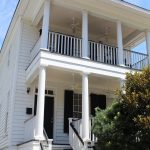
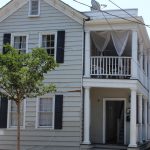
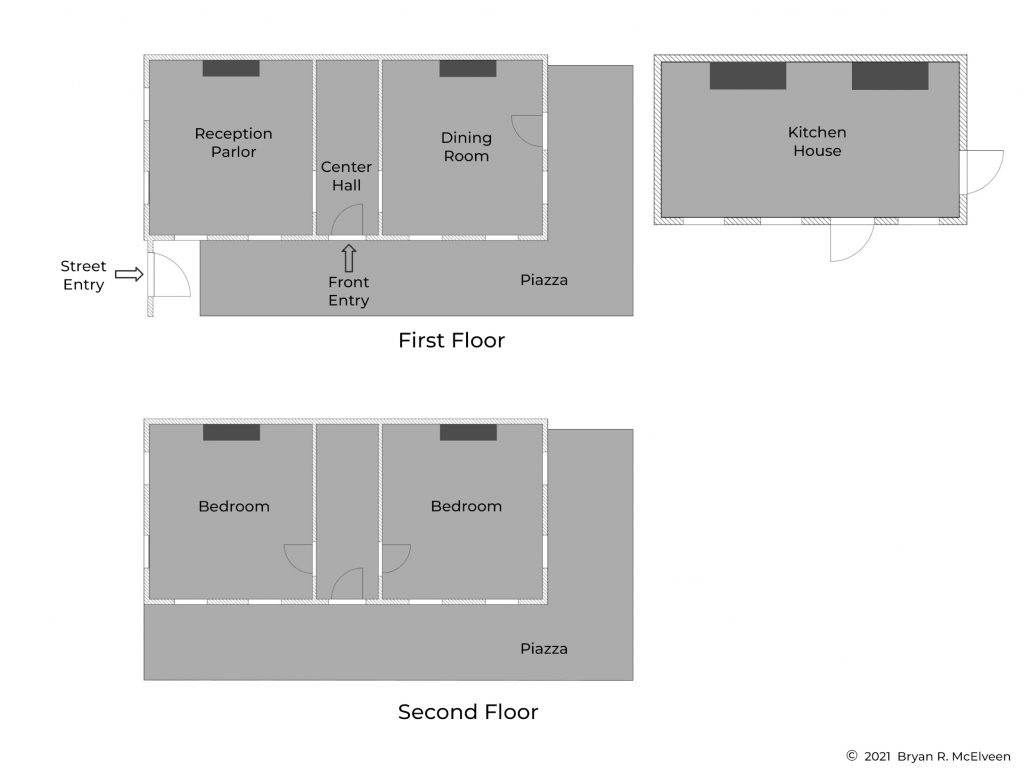
Multi-bedroom historic houses are the familiar version of College of Charleston off-campus life. Many are Charleston Singles or later houses adapted to narrow lots and shared living.
The apparent bedroom count is only a starting point. Verify legal use, permits, egress, bathrooms, electrical capacity, HVAC distribution, moisture, roof condition, foundation, and whether later alterations improved the house or simply gave every room a lock.




Upper-floor flats and condominiums
Residential space above historic storefronts can deliver the most urban version of Charleston student life. It can also involve stairs, shared entrances, limited parking, street noise, trash logistics, older systems, and building rules written for an entirely different owner.
Review the master deed, bylaws, leasing restrictions, student-occupancy rules, insurance structure, reserves, pending assessments, and responsibility for windows, roofs, exterior walls, and common systems.
Purpose-built apartments
Newer apartment communities generally offer simpler leasing, professional management, controlled access, and amenities such as parking, pools, gyms, or study rooms. They also remove most of the ownership question entirely, which is sometimes a feature rather than a missed opportunity.
The College maintains a current overview of larger off-campus providers within approximately two miles of campus. Use that list as a starting point, then compare total cost, lease dates, transit, management reviews, roommate policies, and what happens when one student leaves early.

Home Listings
The carousel below is a sample of current downtown inventory, not a complete list of properties suitable for a student and roommates. Public listings can show price, photographs, bedrooms, parking, and regime fees; they cannot establish legal occupancy, association permission, realistic insurance, or whether the numbers survive an imperfect year.
Locating and evaluating appropriate homes for student-parents is a client-level service. The search becomes useful when each promising listing is reviewed as a property, an operating plan, and an eventual exit.


The useful search begins after the listing catches your eye.
I help represented buyers narrow the downtown inventory, investigate property-specific restrictions and costs, and decide which homes deserve further time and expense.
Rent or Buy
The useful comparison is not rent versus mortgage. Renting buys flexibility. Buying trades that flexibility for control, responsibility, and a possible longer-term asset.
If the purchase only works because every bedroom rents every month and nothing expensive breaks, it is not a plan. It is weather-dependent optimism in loafers.
Would you still want the property if the student changed plans next semester? If not, rent first. Ownership should survive more than one student’s calendar.

Choose flexibility
Choose control
Reject fragile math
Cost of Ownership
Acquisition and financing
Down payment, lender costs, inspections, appraisal, attorney fees, prepaid taxes and insurance, immediate repairs, and the cost of furnishing a shared home.
Property taxes
Do not reuse the seller’s current bill or assume the 4% legal-residence classification. Model the property under the expected ownership and occupancy structure.
Insurance and flood
Price homeowners, wind and hail, flood, liability, and any coverage required for rental use. Obtain quotes before the financing contingency becomes decorative.
Operations and maintenance
Utilities, landscaping, pest control, cleaning, HVAC service, locks, appliances, roof, plumbing, electrical work, moisture, and the reserve needed for older buildings.
Vacancy and turnover
Allow for an empty room, late payment, leasing costs, summer gaps, painting, cleaning, damaged furnishings, and the annual migration of people who own more extension cords than lamps.
Exit costs
Brokerage, legal fees, repairs, concessions, taxes, and the time required to sell or reposition the property after graduation.
Do not assume the 4% legal-residence classification
South Carolina’s 4% classification is designed for an owner’s legal residence. A parent-owned home occupied by a student and roommates should be modeled conservatively as non-owner-occupied unless Charleston County confirms otherwise for the exact ownership and occupancy arrangement.
The county’s current legal-residence application states that a residence rented for more than 72 days in a calendar year does not qualify for that year. Ownership structure, occupancy, and exceptions require professional review.
Read the Charleston property tax guide · Review the county application
Rules & Regulations
Before you buy
- Verify legal use, bedroom configuration, zoning, permits, and certificates.
- Read condominium or HOA restrictions before treating them as closing-table literature.
- Confirm parking, bike storage, trash access, and likely neighbor friction.
Before you lease
- Use a South Carolina attorney or qualified manager for leases and guaranties.
- Establish deposits, notices, roommate replacement, maintenance reporting, and collection procedures.
- Confirm the required business license and rental registration.
While you own
- Maintain a local response plan for leaks, locks, complaints, contractors, and inspections.
- Track renewals, records, licenses, insurance, and annual turnover.
- Do not outsource management to the student by optimism alone.
Rental registration is address-specific
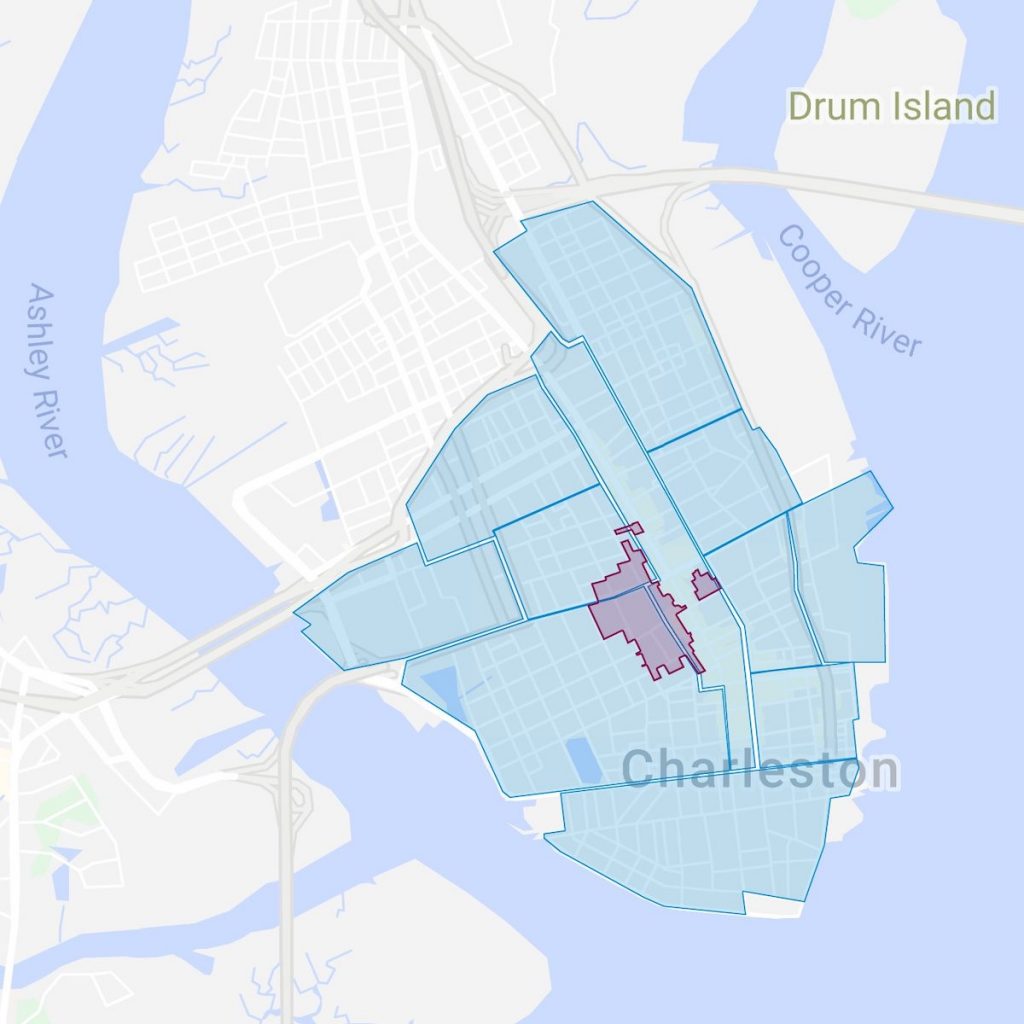
Charleston’s Residential Rental Registration Pilot began in Cannonborough-Elliottborough and now includes Radcliffeborough and Mazyck-Wraggborough. Covered long-term rental units must be registered.
An owner who lives outside South Carolina must designate a responsible local representative within 30 miles of the property. Confirm the property address, jurisdiction, registration status, and current requirements directly with the City.
Review the City program · Review business-license information
Legal use
A listing’s bedroom count is not proof of lawful occupancy. Confirm permits, egress, smoke and carbon-monoxide protection, and whether altered rooms were legally converted.
Association rules
Review student occupancy, leasing caps, minimum terms, move-in rules, parking, insurance, reserves, litigation, and pending assessments before closing.
Local management
Someone must be able to unlock a door, stop a leak, meet a contractor, answer a complaint, and document the response. “The student will handle it” remains a hope wearing a lanyard.
Due Diligence
Read the property
Research the record
Inspect the building
Model ownership
Begin with the way the property actually works
A promising listing should survive a practical walk-through before it graduates to spreadsheets and legal records.
- Walk or bicycle the route to campus at realistic times.
- Test bedroom privacy, bathrooms, stairs, storage, parking, bike access, trash, and outdoor space.
- Notice whether roommates can live independently without turning the kitchen into a hallway.
- Listen for streets, businesses, mechanical equipment, and neighboring uses.
Research the record
- Confirm jurisdiction, zoning, legal use, permits, certificates, rental registration, and business licensing.
- Review the deed, plat, easements, encroachments, historic-district controls, condominium documents, and HOA restrictions.
- Compare the tax record with the actual building and ask why they differ.
Inspect the building
- Use inspectors familiar with historic Charleston construction.
- Evaluate roof, structure, foundation, moisture, termites, electrical service, plumbing, sewer, HVAC, windows, masonry, and drainage.
- Investigate additions and enclosed porches rather than admiring their optimistic square footage.
Model ownership
- Use the expected tax classification, insurance quotes, HOA costs, utilities, maintenance reserve, management, vacancy, and turnover.
- Stress-test lower rent, one empty bedroom, a major repair, and a sale earlier than planned.
- Compare the result with the far less dramatic alternative of signing a lease.
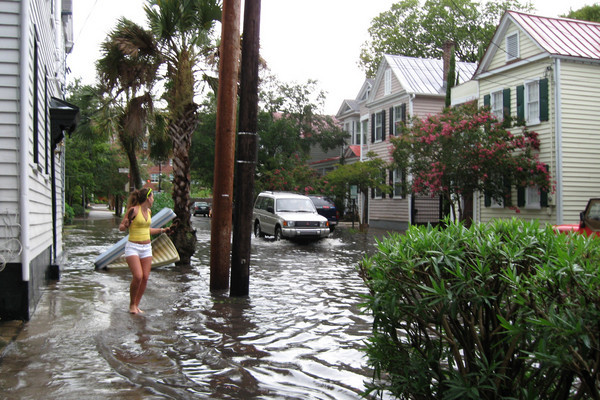
Flood zone is only the beginning of the water question
Review the current FEMA zone, elevation information, prior claims when available, drainage behavior, street flooding, crawlspace or ground-floor exposure, lender requirements, and actual insurance quotes.
Properties outside the Special Flood Hazard Area can still experience local drainage, tidal, or unmapped flood problems.
Read the Charleston flood and insurance guide · City flood-zone information · Charleston County GIS
After Graduation
The purchase should be tested against more than graduation day. Consider the property under several plausible futures:
- Conventional long-term rental: Does it appeal to tenants beyond the student market?
- Family use: Would the location and layout work after a renovation, or is that merely a pleasant story attached to an impractical house?
- Resale: Is demand broad enough that the next buyer need not share the same student-housing plan?
- Repositioning: What repairs, permits, or capital improvements would be needed before the property could serve a different use?
The strongest purchase is not the one with the most optimistic spreadsheet. It is the one with several workable exits.
Sources and edition note
Reviewed August 5, 2026. College deadlines, municipal programs, tax forms, zoning, flood information, and rental requirements can change. Verify current requirements for the exact student, property, ownership structure, and intended use.
Primary references: College of Charleston housing FAQs; College off-campus housing information; City rental-registration pilot; City business-license information; Charleston County legal-residence application; City flood-zone information; and Charleston County GIS.
This guide provides general real estate and editorial context. It is not legal, tax, lending, insurance, engineering, inspection, or property-management advice.